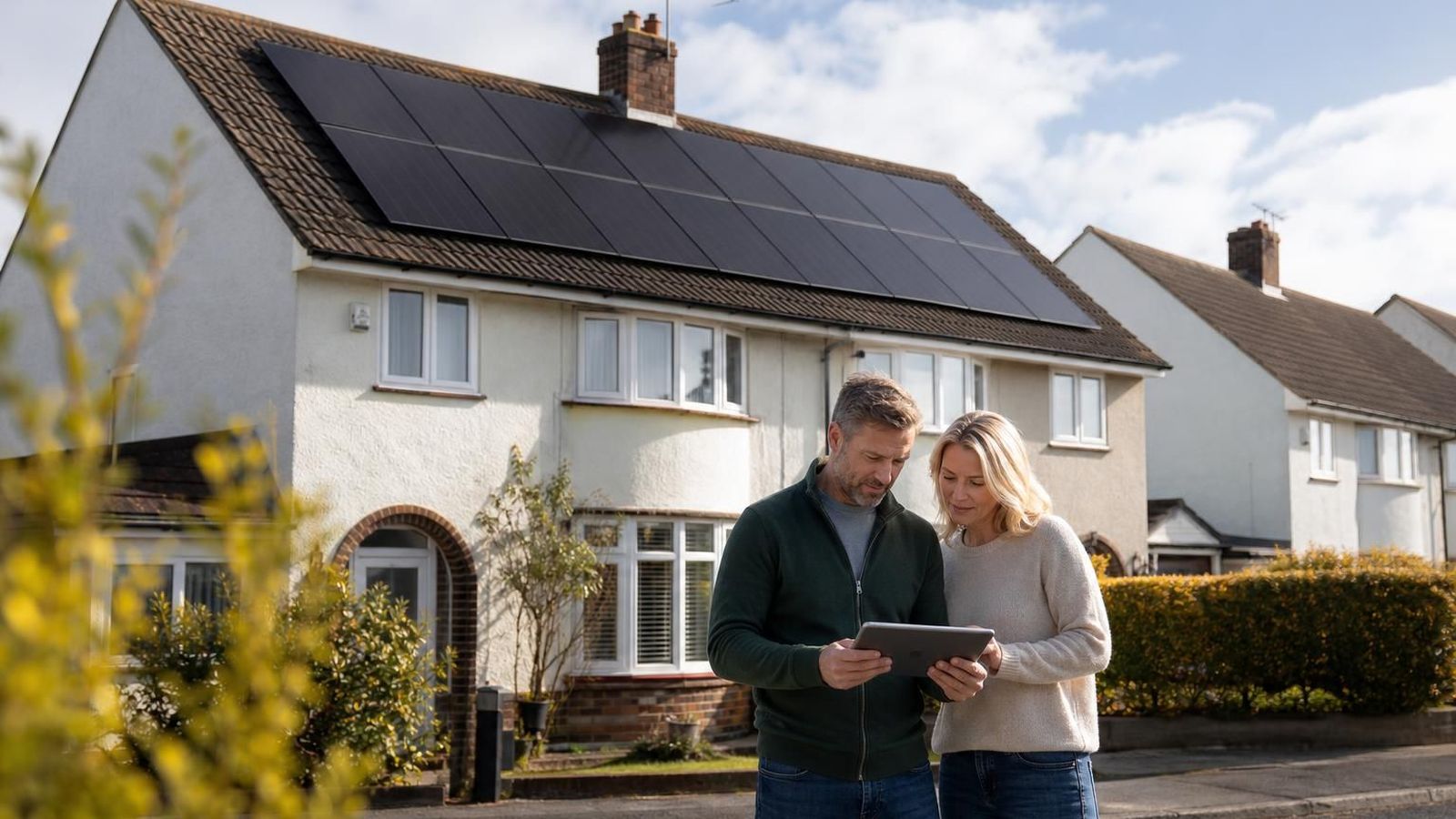
Shared boundaries and access need an early check
The front and rear faces may have different shading and planning context. Ask whether access passes over neighbouring land and who obtains agreement. A modest array that can be safely maintained can be more practical than squeezing in one extra module.
Build a roof and access record
On a terrace, agree the scaffold access and any neighbour permissions before the contractor fixes the layout. A rear extension can complicate an otherwise modest array. Check the roof requirements.
Use measured electricity demand
Do not assume a terrace has low demand. Electric vehicle charging or heating can outweigh a small floor area, but evening demand is not automatically direct solar use. Use annual statement kWh and an explicit daytime share in the savings tool.
Ask for a complete proposal
The cash price should identify modules, inverter, mounting, access, electrical work and commissioning. Keep optional storage and backup separate so their additional return is visible. Read the installation scope and check a received quote.
Use a surveyed annual generation estimate for the actual layout, rather than treating a property-type example as a forecast. The payback model accepts that explicit generation and keeps bill reduction separate from exports.
Sources and review dates
Research-based guidance. Source checks do not imply product testing or verification of an individual installer.
- Energy Saving Trust: Solar panels. Solar suitability, generation, roof and installation considerations; not a local quote dataset. Scope: UK. Checked .
- Trinasolar: Vertex S+ NEG9RC.27. Example 450 W module format 1762 x 1134 x 30 mm; identify exact module revision on a quote. Scope: Product specification. Checked .
Registry sources-2026-11-01. Tariffs have a 30-day internal review interval. Methodology and assumptions.